
Booster Pack Heroes Best Upgrades for Early Progress
Choose early Mastery upgrades, compare Squire and tower options, and adjust for bosses with clear retail and demo evidence limits.
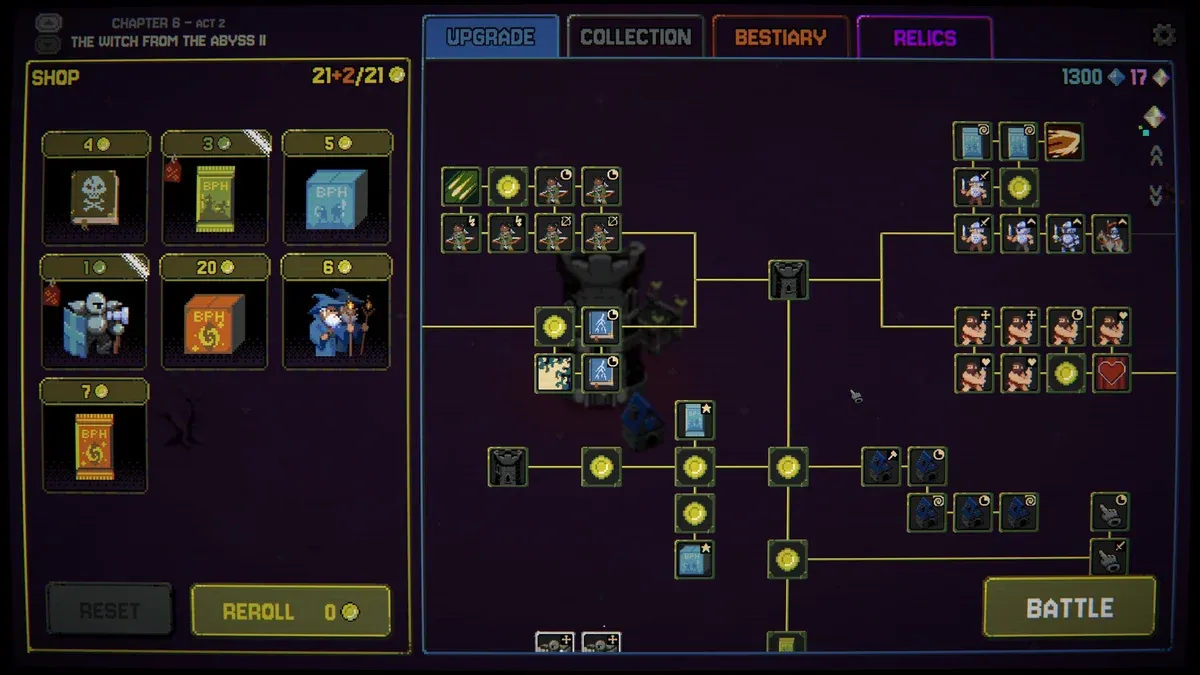
Which upgrades should you buy first?
These are source-based recommendations organized around common progression problems. The available evidence supports a situational spending plan, while a universal ranking of every upgrade remains unconfirmed.
Version scope: This guide covers the Steam retail release dated November 10, 2026, using information collected November 11. Exact screenshot observations have separate evidence limits, explained below. The official Steam listing establishes the retail release date and describes the Mastery progression system.
| Suggested priority | Upgrade focus | When to consider it |
|---|---|---|
| Opening survival | Tower HP | Your tower falls before your army develops |
| Opening combat | Squire investment | Squires regularly contribute to your early fights |
| Economy | Income quests | A reachable task improves your stage purchasing power |
| Pack handling | Opening speed | Packs accumulate while combat demands your attention |
| Current progression wall | Boss damage or tower protection | You reach the boss but repeatedly lose |
Treat this order as a starting point. If your tower already survives comfortably, additional protection may have less immediate value than improving damage. If packs sit unopened during dangerous waves, investigate that problem before assuming every loss requires stronger heroes.
The official progression description confirms that Mastery upgrades heroes and spells and unlocks abilities. It also connects boss victories with new packs, heroes, spells, and challenges. That makes your next reachable improvement a useful spending target. See the publisher’s game description.
Best upgrades for the opening runs
Early purchases should help the army and tower you actually have. The supplied editorial observations identify Tower HP and common Squire investment as opening priorities, but they do not establish a mandatory purchase sequence or current retail prices for every level.
Start by watching how the run fails. A tower that takes lethal damage while enemies are nearly defeated presents a different problem from an army that cannot clear the opening pressure. The former suggests investigating protection; the latter suggests checking affordable combat improvements.
Squire upgrades deserve attention when that unit appears regularly in your opening army. Consistent participation gives an upgrade repeated opportunities to help. However, “buy Squire upgrades” should not become an instruction to keep investing after your current problem changes.
What the recorded tooltips actually show
The supplied screenshot notes record two specific upgrades. Their build is unidentified, so these are demonstration-only observations. Their costs and effects have not been established specifically for retail patch 1.0.30D.
| Recorded upgrade | Effect summarized in the screenshot notes | Mastery cost shown |
|---|---|---|
| Squire Might | +50% attack | 10 |
| Aegis Ward | Shield equal to 50% of tower HP; Shockwave when the shield breaks | 75,000 |
Squire Might provides a concrete example of a small opening purchase. If your current tooltip matches that observation and Squires are doing useful work, it is a reasonable option to evaluate. The screenshot does not establish subsequent prices, stacking rules, or an optimal number of purchases.
Aegis Ward illustrates a much larger defensive investment. Its displayed shield ties protection to tower HP, making those values relevant to the same decision. The notes do not establish shield refresh behavior, Shockwave damage, or its interaction with every modifier.
Compare each available purchase against your current tooltip and the problem you want it to solve. A large percentage alone cannot tell you how much the upgrade will improve a run.
When should income quests and opening speed take priority?
A useful best upgrades plan should consider how effectively you turn progression into an active army. Stronger individual units are only one part of that process.
The supplied review describes tasks that increase the gold available before stages. Treat this as player experience from an unspecified build, rather than confirmation of every retail quest reward. Inspect the task and reward currently displayed before making it your next objective.
A reachable income task can be worth pursuing when it improves purchasing power across upcoming stages. However, the references do not provide a complete retail quest list, reward schedule, or calculation showing exactly when income overtakes combat upgrades.
Use these checks before committing:
- Read the current task requirements and its stated reward.
- Consider whether ordinary play already advances the objective.
- Check whether pursuing it delays an improvement needed to survive.
Opening speed addresses another problem: keeping up with packs during combat. The supplied review describes hovering over battlefield packs to open them while also using the cursor to damage enemies. That is player experience, and its exact build is unspecified.
If unopened packs repeatedly accumulate, inspect available opening improvements. If you already clear them promptly, their immediate benefit may be smaller. No supplied retail timing comparison establishes a universal opening-speed breakpoint.
Before buying, watch one attempt specifically for missed packs and cursor pressure. This observation helps distinguish a handling problem from insufficient damage. It also gives you a useful comparison after the upgrade: whether you can open packs more reliably while responding to threats.
Official gameplay video
The launch trailer by Funday Games shows the game’s general pack-opening and tower-defense loop. It is a gameplay overview, rather than a demonstration of this guide’s specific objective.

Booster Pack Heroes — Official Launch Trailer by Funday Games
Best upgrades for bosses and tower defense
Once you consistently reach a boss, choose your next investment according to what happens during that encounter. Reaching the same fight repeatedly gives you a clearer basis for comparing purchases.
The supplied review favors particular heroes and describes a difficult additional boss phase. Those are player experience claims from an unspecified build. They do not establish a retail-wide hero tier list, or prove that every chapter requires the same rare pull.
| What you observe | Upgrade direction to investigate | What to check afterward |
|---|---|---|
| The tower falls while the boss is nearly defeated | Tower HP or protection | Whether the added survival time changes the outcome |
| The boss remains healthy despite a surviving army | Relevant hero or spell damage | Whether the boss loses health faster |
| Packs pile up during the encounter | Opening speed | Whether reinforcements become easier to access |
| Results depend heavily on one favorable pull | Upgrades benefiting your usual army | Whether ordinary attempts become more productive |
These are decision criteria, rather than guaranteed solutions. The supplied sources contain no controlled damage comparison proving which purchase produces the largest improvement against each boss.
For damage investment, inspect the heroes and spells that contribute during your attempts. A recommendation built around a rare unit has limited practical value if that unit seldom participates in your current runs.
For defense, ask whether more survival time would let your existing army finish the fight. Aegis Ward is a recorded example of protection, but its demonstration-only cost should not become a reason to postpone every other purchase.
The full game also has substantially more content than these two tooltip examples cover. The developer’s launch announcement lists over 500 upgrades, 40 units across 10 booster packs, and 40 relics. Those figures explain why a small selection of observations cannot establish the entire upgrade hierarchy. See the official full-game announcement.
After each purchase, compare the same practical outcome: reaching the boss, preserving the tower, or dealing more damage during the encounter. Record whether the improvement helped before choosing another expensive investment.
What patch 1.0.30D changes about upgrade advice
Current best upgrades advice needs to account for progression fixes. An interrupted purchase or missing reward can affect your options without demonstrating that an upgrade path is weak.
The following changes are explicitly documented in the official patch 1.0.30D announcement. Their practical implications below are recommendations based on those changes.
| Documented change | Why it matters when planning upgrades |
|---|---|
| Fixed an integer overflow that prevented further upgrade purchases | Check your installed version if purchasing unexpectedly stops |
| Quests continue progressing when you keep playing completed acts 1 or 2 | Remaining tasks can still be relevant after completing those acts |
| Fixed the final relic pack quest reward | A missing reward may relate to the corrected bug |
| Reduced enemy strength in the Plane of Death | Reassess older advice about the difficulty of that area |
| Reduced hero HP loss during the final Frozen Plane blizzard stage | Earlier survival recommendations may need reevaluation |
The completed-act change has a specific scope: acts 1 and 2 can continue after completion, with quests progressing. It does not establish unrestricted chapter selection or a repeatable relic-farming method.
Keep demo changes separate, too. The official Next Fest demo update reworked Illusionist upgrades, adjusted enemies, and changed shop rolls. Those notes demonstrate that older builds differ; they do not provide current retail rankings. Consult the official demo update announcement when comparing older footage.
For your next run, identify one recurring failure, select an available purchase aimed at it, and check the result. Reconsider the spending order when that failure changes.
Best upgrades FAQ
Is there a confirmed best upgrades tier list?
The available evidence does not establish a universal retail tier list. It supports a situational approach: opening Tower HP and Squire investment, then income quests and opening speed as needed, followed by damage or protection suited to your current obstacle.
Should I buy Squire Might first?
Consider it when Squires regularly contribute and early damage is your problem. The supplied screenshot notes show +50% attack for 10 Mastery, but the build is unidentified. Check your current tooltip and whether tower survival is a more urgent issue before purchasing.
Is Aegis Ward worth saving for?
It is a defensive option to evaluate when tower survival limits progress. The recorded tooltip describes a shield worth 50% of tower HP and a Shockwave on breaking, with 75,000 Mastery shown. Its retail 1.0.30D cost and performance are unconfirmed by the available evidence.
Do these recommendations apply equally to the demo and mobile versions?
This guide targets Steam retail. Demo observations and unidentified-build screenshots are labeled separately. The supplied material does not establish identical upgrade costs, balance, or an optimal purchase order across Steam, the demo, and mobile builds. Check the tooltip and version relevant to your game.
Related guides
Related Articles
guide
Booster Pack Heroes Beginner Guide & Early Upgrades
Learn the opening loop in Booster Pack Heroes, manage resources, complete income quests, and make informed pack and Mastery choices.
guide
Booster Pack Heroes Permanent Foilium Upgrade Guide
Choose permanent Foilium upgrades for your current bottleneck, with shop priorities, relic capacity, and Mastery Interest explained.
guide
Booster Pack Heroes Endless Mode & Replay Options
Is Booster Pack Heroes endless mode confirmed? Learn what patch 1.0.30D adds, which continuation options are verified, and how demo reports differ.
Was this helpful?
Thanks for the feedback!